
Seguin Seeks $1.1 Million for Flood Planning
Story by Betterseguin.org
Flooding remains a concern for Seguin residents, particularly as new development adds rooftops, roads, and parking lots that can increase stormwater runoff.
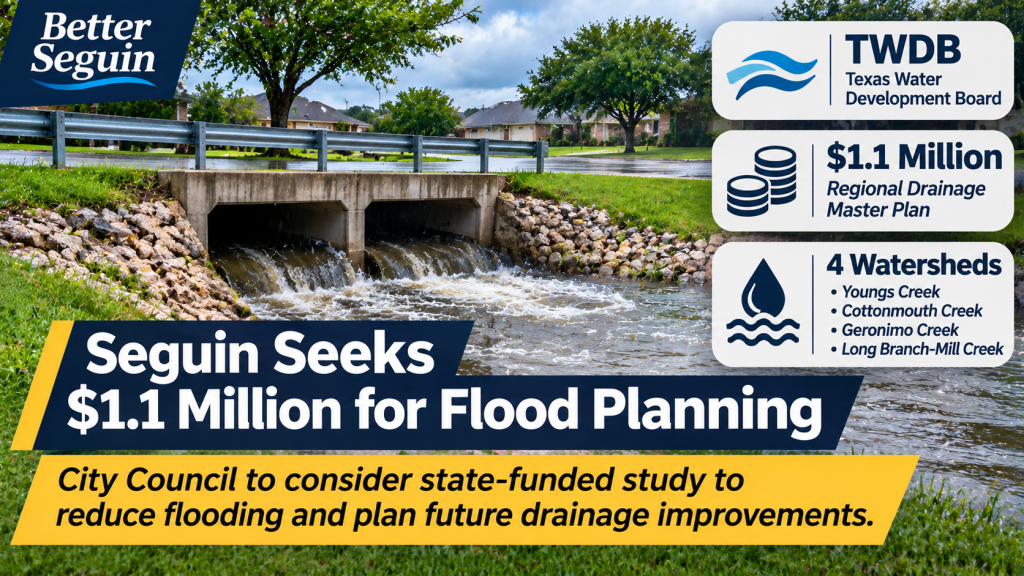
On November 17, Seguin City Council will consider authorizing the City Manager to execute a funding agreement with the Texas Water Development Board (TWDB) to help improve regional flood planning.
What Is Being Proposed?
Agenda Item 26-506 involves funding for an expanded Regional Drainage Master Plan.
Unlike construction projects that immediately improve drainage, this effort focuses on identifying flooding problems and developing solutions before investing in major infrastructure improvements.
The proposed study would examine four important watersheds:
- Youngs Creek
- Cottonmouth Creek
- Geronimo Creek
- Long Branch-Mill Creek
Engineers would study how water moves through these areas, identify flooding risks, and recommend improvements such as larger drainage channels, detention ponds, or other flood-control measures.
How Much Will It Cost?
The city’s earlier funding application estimated a total project cost of $1.1 million, divided as follows:
- $825,000 — State grant funding (75%)
- $275,000 — Zero-interest state loan (25%)
The loan would still need to be repaid, although no interest would be charged.
The final funding amounts under the November agreement have not yet been confirmed.

Why Does This Matter?
Seguin adopted a Drainage Master Plan in January 2026. This proposed regional expansion would examine additional watersheds, including areas extending beyond city boundaries.
That’s important because flooding doesn’t stop at city limits.
The completed studies could also help Seguin qualify for additional state funding to construct future flood-control improvements.
Questions Worth Asking
- Which neighborhoods and properties face the greatest flooding risks?
- How will future residential and commercial development affect drainage?
- When will the regional study be completed?
- Will the city require developers to address drainage impacts identified by the study?
- How much additional funding might be needed to implement the recommendations?
The Bigger Picture
Planning for flooding before development occurs is generally less costly than correcting drainage problems afterward.
Seguin’s challenge is ensuring that growth does not create new flooding problems for existing residents.
A comprehensive regional drainage plan could be an important step toward protecting homes, businesses, and public infrastructure.
Agenda Item 26-506 — November 17, 2026
Sources: