Bible Study: False Teachers — “Did God Really Say?”
Main Theme:
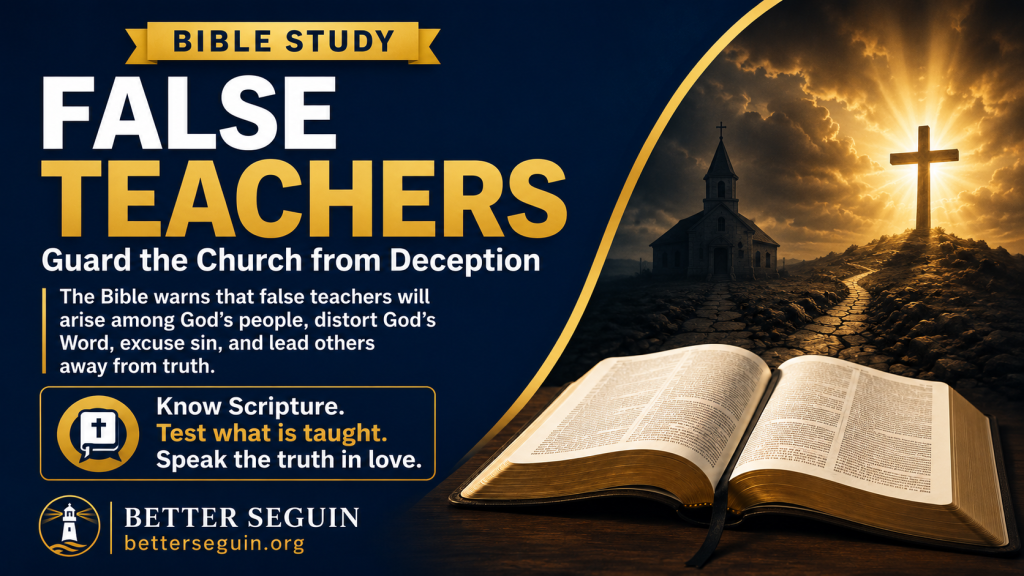
The Bible warns that false teachers will come among God’s people, distort God’s Word, excuse sin, and lead others away from truth. Christians must know Scripture, test what is taught, speak the truth in love, and guard the church from deception.
Recommended Bible Translation: NIV
Suggested Length: 45–60 minutes
1. Opening Thought
From the very beginning, Satan’s strategy has been to question, twist, and deny the Word of God. In the Garden of Eden, the serpent asked Eve, “Did God really say…” and then led her to doubt God’s command.
That same pattern continues today. False teachers may not always deny God outright. Instead, they often soften, redefine, or explain away what God has clearly said. They may say things like:
- Did God really say that?
- That was only cultural
- God just wants love, not obidence
- That sin is not really sin anymore
- Homosexuality is not mentioned in the bible
As Christians, we are called to love our neighbors, but biblical love never requires us to deny biblical truth. We are called to love people while refusing to celebrate or excuse sin.
2. Key Scriptures to Read
Read these passages aloud from the NIV Bible:
- Genesis 3:1–5 — Satan questions and twists God’s Word.
- Matthew 7:15–20 — Jesus warns about false prophets and bad fruit.
- Acts 17:11 — The Bereans tested teaching against Scripture.
- 2 Timothy 3:16–17 — Scripture equips God’s people for every good work.
- 2 Peter 2:1–3 — False teachers secretly introduce destructive heresies.
- Jude 3–4 — Some people distort grace into a license for immorality.
- Galatians 1:6–9 — Paul warns against preaching a different gospel.
- James 3:1 — Teachers will be judged more strictly.
- Matthew 18:6–7 — Jesus gives a severe warning about causing believers to stumble.
- Romans 1:24–27 — Scripture addresses same-sex sexual conduct.
- 1 Corinthians 6:9–11 — Sin is named, but cleansing and redemption are offered in Christ.
- Ephesians 4:15 — Christians are to speak the truth in love.
3. What Should Christians Watch Out For?
False teachers are not always obvious. Jesus said they may come in “sheep’s clothing,” meaning they may sound caring, spiritual, loving, or even biblical on the surface. But their teaching leads people away from obedience to God.
Christians should watch out for teachers who:
- Question clear biblical teaching
Like Satan in the garden, false teachers often begin by creating doubt: “Did God really say?” - Redefine sin instead of calling people to repentance
The Bible teaches that all people are sinners in need of grace. False teachers often remove the need for repentance by saying certain sins are no longer sin. - Use love as an excuse to ignore truth
God is love, but God is also holy. Biblical love does not celebrate what God calls sin. - Twist grace into permission to continue in sin
Jude warns that some distort the grace of God into a license for immorality. - Tell people what they want to hear
2 Timothy 4:3–4 warns that people will gather teachers who say what their “itching ears” want to hear. - Produce bad spiritual fruit
Jesus said we will recognize false prophets by their fruit. Teaching that leads to confusion, rebellion, pride, or rejection of Scripture is not good fruit.
4. How Do We Know What the Truth Is?
The truth is not based on culture, feelings, public opinion, politics, or personal preference. Truth comes from God, and God has revealed His truth through Scripture.
Acts 17:11 tells us that the Bereans were noble because they examined the Scriptures daily to see if what they were being taught was true. They did not simply accept teaching because it sounded good or came from a religious leader.
Christians must do the same.
We should ask:
- Does this teaching agree with the whole Bible?
- Is the teacher explaining Scripture or explaining Scripture away?
- Is sin being confronted or excused?
- Is repentance being taught?
- Is Jesus being presented as Savior and Lord?
- Does this teaching lead people toward holiness or away from it?
The Christian who does not know the Bible is easier to deceive. That is why every believer must read, study, and test everything by Scripture.
5. False Teachers and the Garden of Eden
Genesis 3 shows the first spiritual deception. Satan did not begin by saying, “Ignore God.” He began with a question: “Did God really say…?”
That question planted doubt. Then Satan contradicted God’s warning and made disobedience look good.
False teaching today often works the same way. It may sound compassionate, modern, enlightened, or loving, but the goal is the same: to make people doubt God’s Word and accept what God has forbidden.
When someone says, “The Bible does not really say homosexuality is sin,” Christians should not respond with anger or cruelty, but we should respond with Scripture. The Bible does address same-sex sexual conduct, including in Romans 1, 1 Corinthians 6, and 1 Timothy 1. These passages are part of God’s Word, and Christians do not have the authority to remove them.
At the same time, 1 Corinthians 6 reminds us that the gospel is not only about naming sin. It is also about redemption. Paul lists many sins and then reminds believers that some of them had once lived that way, but they were washed, sanctified, and justified in the name of Jesus Christ.
That means Christians should never speak as though one sin is beyond God’s grace. The message is not “we are better than them.” The message is “all have sinned, all need repentance, and all can be forgiven through Christ.”
6. What Is the Punishment for False Teachers?
The Bible gives serious warnings about false teachers because they do great spiritual harm. They do not merely make private mistakes; they influence others and may lead people away from salvation, repentance, and obedience.
James 3:1 says teachers will be judged more strictly. 2 Peter 2 warns that false teachers bring destruction on themselves. Galatians 1 gives a severe warning against anyone preaching a different gospel. Matthew 18 warns about causing believers, especially vulnerable ones, to stumble.
These warnings should sober every pastor, teacher, parent, and Christian leader.
God takes false teaching seriously because it damages souls.
7. What About Those Who Cause Others to Fall?
Jesus gave a strong warning in Matthew 18 about causing others to stumble. This includes anyone who influences believers, children, or spiritually vulnerable people toward sin, confusion, or rebellion against God.
This is why Christians should be especially concerned when public events, schools, churches, or community leaders promote messages that contradict Scripture, especially to children and young people.
Children are impressionable. Believers are called to protect them, teach them truth, and not place spiritual stumbling blocks in their path.
8. Should Christians Call Out False Teachers?
Yes, but we must do it biblically.
Christians are not called to be silent when God’s Word is twisted. Jesus warned about false prophets. Paul named false teaching. Jude told believers to contend for the faith. Titus 1:9 says church leaders must encourage others by sound doctrine and refute those who oppose it.
However, calling out false teaching must not be done with hatred, pride, mockery, or personal cruelty. Ephesians 4:15 tells us to speak the truth in love.
That means:
- We confront false teaching, not with rage, but with Scripture.
- We correct error, not to win an argument, but to protect souls.
- We speak clearly, but not hatefully.
- We love people enough to tell the truth.
- We remember that we are also sinners saved by grace.
Biblical love does not mean affirming everything a person believes or does. Biblical love means wanting what is eternally good for them.
9. Applying This to the PrideFest Issue
In today’s culture, many people claim that biblical Christianity must change its teaching on sexuality in order to be loving. Some argue that homosexuality is not really addressed in the Bible, or that the biblical passages no longer apply.
But Christians do not have the authority to rewrite Scripture. The Bible does address sexual sin, including homosexual conduct, heterosexual immorality, adultery, lust, and all forms of sexual activity outside God’s design for marriage.
At the same time, Christians must be careful in how we speak. We should not act as though sexual sin is the only sin, or as though people struggling with sexual sin are beyond God’s mercy. We must be truthful and compassionate.
The Christian position should be:
“We love our neighbors. We care about every person. We believe every person is made in the image of God. But because we love God and love people, we cannot call sin good. We cannot celebrate what Scripture says requires repentance. Real love tells the truth and points people to Jesus.”
10. Discussion Questions
- Why do you think Satan began by asking, “Did God really say?”
- What are some ways people question or twist Scripture today?
- Why is it dangerous to separate love from truth?
- How can Christians speak clearly about sin without becoming hateful?
- Why is it important for every believer to read the Bible personally?
- What is the difference between judging people pridefully and discerning false teaching biblically?
- How should Christians respond when leaders, churches, or public voices contradict Scripture?
- How can we protect children and young believers from spiritual confusion?
- Why is repentance an act of grace, not cruelty?
- How can we show love to people while refusing to affirm sin?
11. Practical Application
This week, commit to doing three things:
- Read the Bible daily
Do not rely only on pastors, teachers, podcasts, or social media. Know God’s Word for yourself. - Test every teaching by Scripture
Ask whether the message agrees with the whole counsel of God. - Speak truth in love
Do not be silent when Scripture is twisted, but do not speak with hatred. Let your words be firm, humble, and grounded in God’s Word.
12. Closing Prayer
Lord, give us wisdom to recognize false teaching and courage to stand on Your Word. Help us to know Scripture, love truth, and speak with humility. Keep us from pride, anger, and fear. Teach us to love our neighbors without compromising Your commands. Protect our children, our families, our churches, and our community from deception. Help us point people not only away from sin, but toward forgiveness, repentance, and new life in Jesus Christ. Amen.